The visionary behind Tyler County’s Heritage Village

Long before Heritage Village Museum became one of Tyler County’s most beloved destinations, it was simply the dream of an artist named Clyde Edward Gray. Born on August 20, 1907, in Antioch, Arkansas, Clyde Gray was a man whose creativity and curiosity shaped one of East Texas’s most treasured cultural landmarks.
After finishing high school, Gray moved to Chicago to study art—an early sign that his imagination was destined to reach far beyond rural Arkansas. He built a career as an illustrator and cartoonist, later serving in the U.S. Navy and working on merchant ships, sketching scenes of life at sea even while on duty. His artistic journey eventually brought him to Beaumont, Texas, where he worked for Sabine Towing, a marine towing company, and met his future wife, Lillian Virginia “Bill” Rice.
From Beaumont to Woodville: a farm becomes a dedication to history
In the early 1950s, Clyde and Bill Gray traded the bustling port city for the quiet charm of Tyler County, purchasing the old Rainey Strawberry Farm near Woodville. There, they began raising Nubian goats—but Clyde’s artistic spirit soon resurfaced. He started painting East Texas landscapes in oils and watercolors, capturing the beauty of rural life that was rapidly disappearing.
Bill, ever the creative partner, planted a garden behind their home and began advertising it as the Heritage Garden—view it while Clyde paints your picture. That simple sign sparked something much bigger. To complement his art and attract visitors, Clyde began placing old relics and antiques around the property. The farm slowly transformed into what he called Heritage Gardens, a “garden of history” that celebrated the stories and artifacts of early Texas life.
The first treasures of Heritage Village
The first major artifact in Clyde’s growing collection was a Civil War-era anchor, salvaged from Port Arthur by the Gray family’s company. Then came the donation of the Tolar Cabin kitchen in 1964, marking the first significant acquisition that would anchor the site’s historic charm. Soon after, the Midway School was relocated to the grounds—now famously known as home to the Pickett House Restaurant, where guests can still enjoy family-style Southern cooking today.
Painting history: Clyde Gray’s artistic legacy

Clyde Gray’s art funded his museum dreams. He painted tirelessly, selling his works to finance new exhibits, restorations, and expansions. But his most innovative artistic achievement came through an unexpected collaboration with a local tile manufacturer. Together, they developed a unique under-glazing process that allowed Clyde to paint enduring scenes on ceramic tiles—a form that could withstand fire and time.
Gray saw this as the perfect medium for storytelling. “The beauty of painting on tile is that fire can’t destroy it,” he once said. This belief culminated in his remarkable project, “The Walls of Texas History,” created for the state’s 1986 Sesquicentennial Celebration. His dedication to preserving Texas culture earned him the National Liberty Medal from the Texas Heritage Foundation for Distinguished Art and Ceramics—a first for a Texas artist.
A Dream Passed On: The Creation of Heritage Village Museum
In 1987, Clyde and Bill Gray sold their beloved property to the Tyler County Heritage Society, ensuring that the collection—and its story—would live on. When Clyde Gray passed away in 1989, his dream had already become something far greater than he could have imagined.
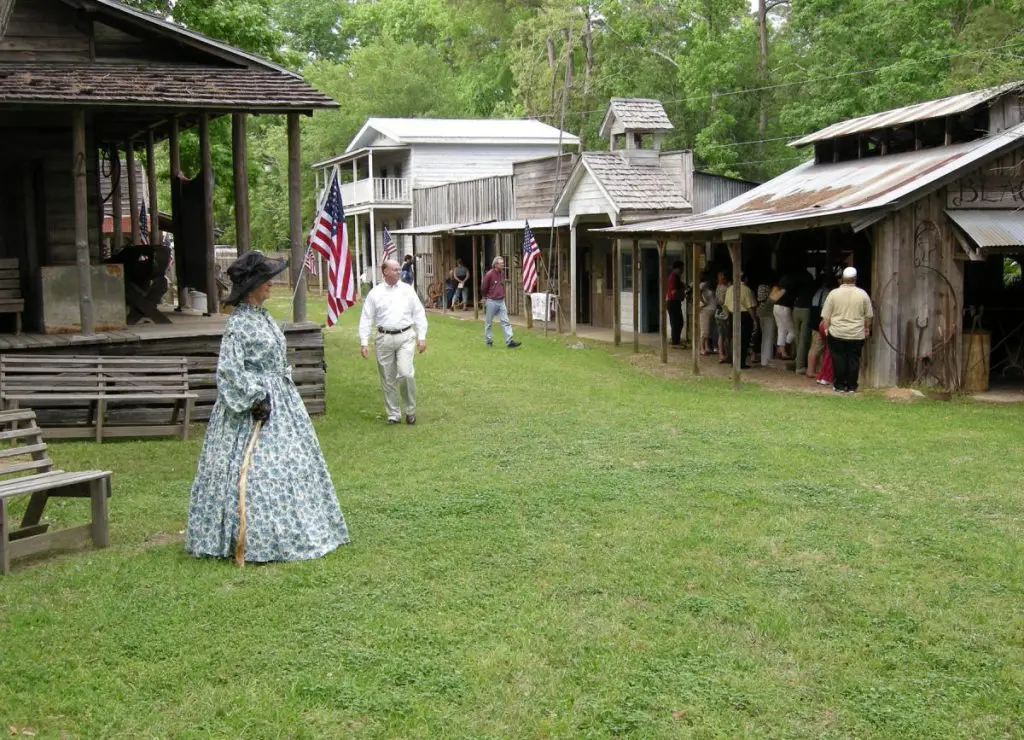
Today, Heritage Village Museum in Woodville, Texas, stands as a living tribute to his vision. Visitors from around the world walk through its pioneer buildings, dine at the Pickett House, and step back into a world where Texas history is not just remembered—but felt.
Honoring Clyde Gray’s Enduring Legacy
Clyde Gray’s spirit still echoes through the Village he built—through every weathered cabin, every artifact, and every tile etched with history. What began as a small garden and an artist’s gallery has grown into a beloved museum that continues to educate and inspire generations.
For anyone who loves Texas history, folk art, or the simple beauty of a vision made real, Heritage Village Museum remains a must-visit destination—and a heartfelt reminder that one person’s creativity can indeed preserve the past for us all.